A Brand Strategist
Good brand strategists should be nerds, creatives, suits, and psychologists all at once.
This article was published by Marketing Magazine in January 2016.
Tell us about your typical day. Who do you meet with and deliver to, and what are you expected to deliver?
I typically spend my day with a creative director (ideating a company position), a researcher (looking for customer insights), a graphic designer (creating a visual identity), a writer (explaining the brand in words), and, of course, a client (setting objectives and evaluating progress). A typical project takes three months, but I’m not expected to deliver every day. The client expects weekly progress updates. Inevitably, we produce a brand model and a graphic style guide.
Give us the gist of what brand strategy is all about.
A brand is what people think and feel about a company. By listening to and responding to those thoughts and feelings, brand strategy helps a company develop relevance (which drives purchases, referrals, perceived high value, and loyalty). Brand strategy is often thought of as a graphic exercise (loosely termed “branding”), but when done properly, it lives comfortably in business planning. As a result of a brand strategy process, companies often change products or services, company or product names, prices, target markets, suppliers, manufacturing techniques, partnerships, cultures, graphic identities, communication styles, HR policies, organizational structures, and more.
90%
Intangible assets, like brand, represent over 90% of S&P 500 market value.
Author:
Chris Neary
Published:

Simply engineering a good product or service isn’t good enough anymore. To get ahead, you have to engineer how people feel about it too.
CHRIS NEARY – FOUNDER AND BRAND STRATEGIST
Tell us about your typical day. Who do you meet with and deliver to, and what are you expected to deliver?
Good brand strategists should be nerds, creatives, suits, and psychologists all at once.
- Nerds: They need to take an analytic approach to research, consume tons of data, and find rhythm in chaos.
- Creatives: They have to distil lots of disparate information into clear concepts.
- Suits: The strategy has to address and progress the business plan for it to have positive outcomes.
- Psychologists: Because branding is somewhat symbolic, they have to understand cognition, semiotics, and behaviour in order to direct perception towards a predictable outcome.
Honing these skills requires being on the job. It’s like swimming. The only training for swimming is swimming.
What kind of person do you see particularly excelling in this role? Why is that?
The traits I’ve seen work are a mix of curiosity, restlessness, creativity, thoughtfulness, and discipline. They need to take complex information, distil it, and simplify it. They need to direct a room of ten people, all of whom have different agendas and perspectives. They need to be bold, honest, and courageous enough to deliver home truths. Above all, the lights need to be on. The person needs to have done a lot of self-development. Without that, they aren’t able to take things beyond the normal reach.
What kind of professional and academic background does this role call for?
I don’t know about education, but experience in advertising and marketing is a must. Working with multiple brands also helps, as it reveals rhythms in the work and allows you to understand them. Being on the client and agency sides is really helpful, as it gives you both perspectives. Exposure to the creative process is something that should be experienced, or you’ll be stuck, unable to work with the team you’re leading.

What career trajectory can a person aiming for this job title expect over time?
They’d probably start as an account exec in a large ad agency, PR firm, or marketing agency. Then they’d move into a management position overseeing their own accounts. Then they’d move to a smaller agency, where they’d start helping run business development and take on a broader role, gaining experience in operational aspects. Then they’d go out on their own and form a partnership in a new company. Then hopefully they’d hire staff and go buy a boat.
Tell us about your biggest challenges working in this field, and how you tackled them.
The first is collecting insights. These are the apertures that help create a relevant brand. They aren’t easy to find, so I partner with experienced researchers and also conduct lots of the primary research myself, which allows me to get closer to the information. The second is educating the client on the work being done. It’s a big learning curve for some people, and the ramifications are often overwhelming. I address this by including the client throughout the process, sometimes facilitating workshops and meetings with no other purpose.
What are some ways in which you’ve seen this role evolve over the years? What do you see it evolving into in the next few years?
Typically, companies have used advertising to achieve relevance, but advertising is not only expensive and perpetual, but it’s also becoming redundant as shoppers become more informed (social media) and more values-based in their decisions. I’ve seen brand strategy adopted by more mid-sized companies over the last five years because they realize its huge potential to differentiate and create value (perceived and actual) for their customers. It’s also a sustainable way to build a business without “buying” customers through ad campaigns. Inevitably, people will increasingly buy more from companies they identify with and that share their values. The authenticity of brand strategy will overtake the cosmetic promises of advertising.
What do you absolutely love about your job? What keeps you going?
I simply must create new things. I thrive on taking a huge, multidimensional problem and solving it. It’s like handling a life-sized Rubik’s Cube. The thrill of pivoting a business and seeing the transformational change in the leadership is what keeps me motivated. I feel very lucky that I get to create things. Important things.
If You Liked That, You’ll Love This…
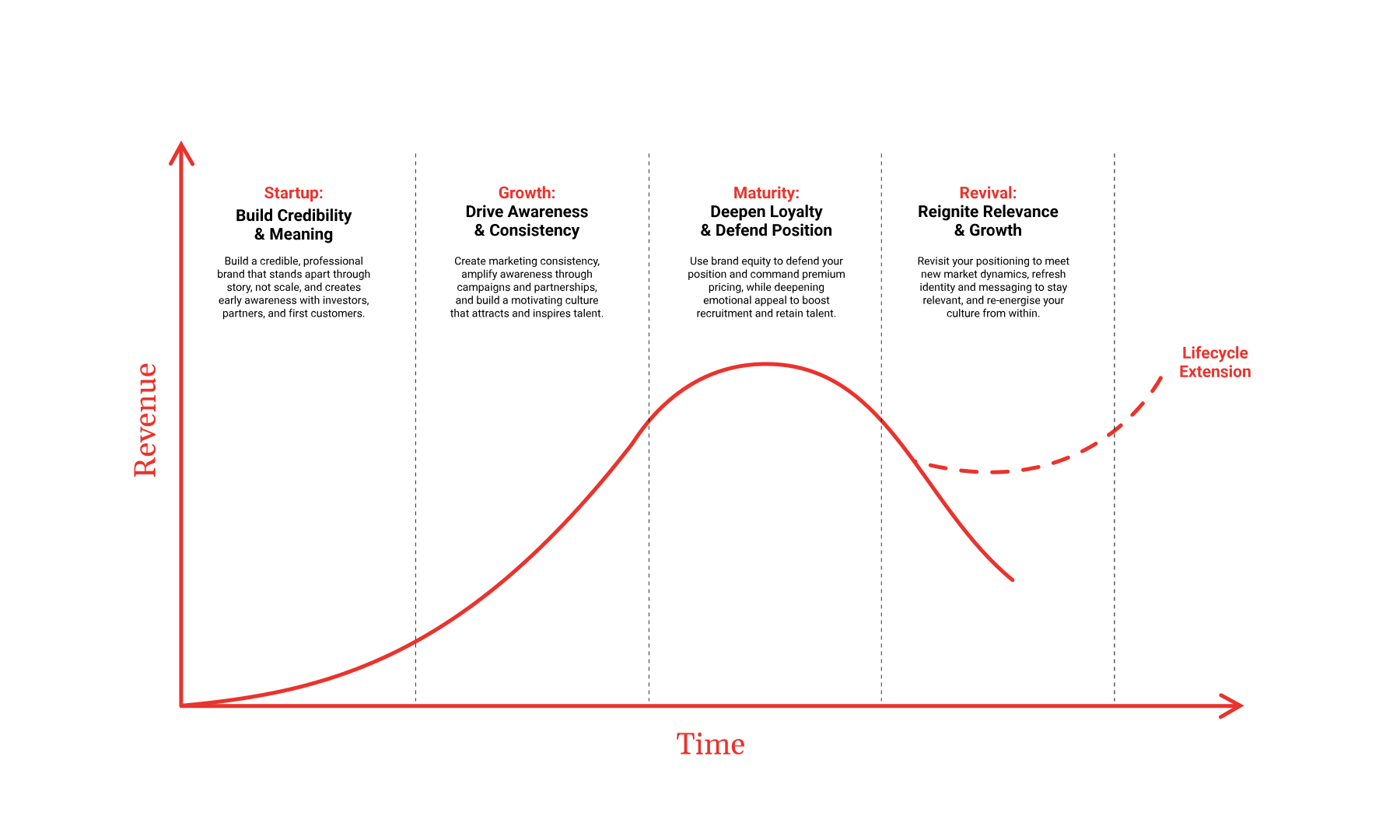
Branding has a different role at every stage of the business lifecycle. Put your money where it matters most.
Excluding exceptions like turnarounds or mergers, most businesses move through four stages: Startup, Growth, Maturity, Revival. Like any other business lever, branding contributes differently at each stage of that evolution. A smart brand investment for a company in Growth won’t deliver the same ROI for one in Startup or Decline. Working with a brand agency…

The Top Ten Ways a Brand Benefits Your Business
There’s a significant difference between a business and a brand. Brands consistently outperform businesses across all metrics. If your business lacks a brand, you’re just a supplier.

Company & Brand Naming – How to name a company.
Effective brand names are rarely born out of thin air, and for most, picking an appropriate name is not as simple as a whiteboard brainstorm. Rather, the process is steeped in analysis, research, ideation and testing. Before there is a name to trademark, test, and create a tagline for, there are some vital steps to…

What does a brand strategist do?
A brand strategist makes you more relevant to your customers. More relevance allows you to charge higher prices, attract the best employees, lower your marketing costs, achieve differentiation, and dominate your category. If you don’t have a brand strategy, you’re just a supplier.